|
» |
|
|
|
 |
|

 |
| |
|
|
 |
|
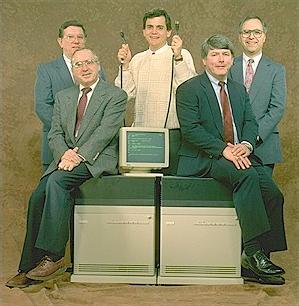
The VAXft 3000 was the first fault-tolerant
system in the industry to run a mainstream operating system
(VMS) and the first system in which every component, including
the backplane, was mirrored. In the event of a power failure,
the complete in-cabinet system was kept operational for up to
fifteen minutes by its own built in power supply. The VAXft
3000 development team included (left to right) Clem O'Brien,
George Hoff, Frernando Colon Osorio, Rich Whitman and Bob Glorioso.
|
| |
|
|
 |
|
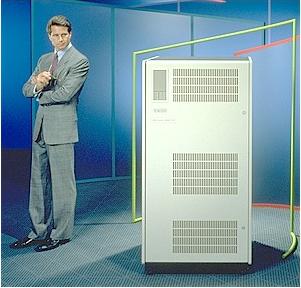
The Mariah chip set, an improvement on the Rigel
chip set, was manufactured in 1.0 micrometer CMOS technology.
The VAX 6500 processor delivered approximately 13 times the
power of a VAX-11/780 system, per processor. The 6500 systems
(shown here) implemented a new cache technique called write-back
cache, which reduced CPU-to-memory traffic on the system bus,
allowing multiprocessor systems to operate more efficiently. |
| |
|
|
 |
|
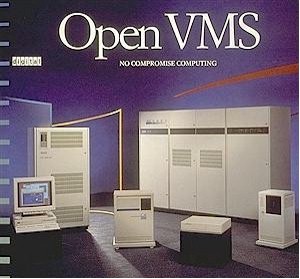
With OpenVMS, VMS now supported the widely accepted
POSIX standards of the IEEE (Institute of Electrical and Electronics
Engineers). The VMS operating system was also "branded"
by X/Open, the nonprofit consortium of many of the world's major
information system suppliers. |
|
|
|
|
|
|